“Contrary to what our fear tells us, being seen without the masks we carefully curate does not destroy us; it restores the humanity we so desperately seek.”
Throughout 2025, this "Culture & Media" column explored the dizzying state of the present, from immediate culture to the invasion of artificial intelligence into our daily lives. We talked a lot about the future that seems to be rushing past us. But for 2026, I suggest a change of pace. I believe that to understand where we’re headed, we also need to look at the past. So, today I introduce a new approach for this column: every month, we will revisit a film celebrating an anniversary, using cinema as a way to see how much the world has changed. Beyond the analysis, there is a simpler and perhaps more urgent reason: it’s good for the soul to indulge in nostalgia. In today's uncertain world, rewatching a classic is a form of self-care. After all, who doesn’t enjoy the comfort of a good movie after a long day? If you’re not sure what to watch today, join me. Let’s get started.
February in Los Angeles. As the industry gears up for the Academy Awards, it's impossible not to notice how the horror genre has elevated itself. Today, boutique studios like A24 have turned fear into a brand, producing smart, visually stunning, and award-winning films. "Elevated horror" has become the critic's favorite. But this sophistication has a specific origin: February 1991, when The Silence of the Lambs hit theaters and shattered conventions.
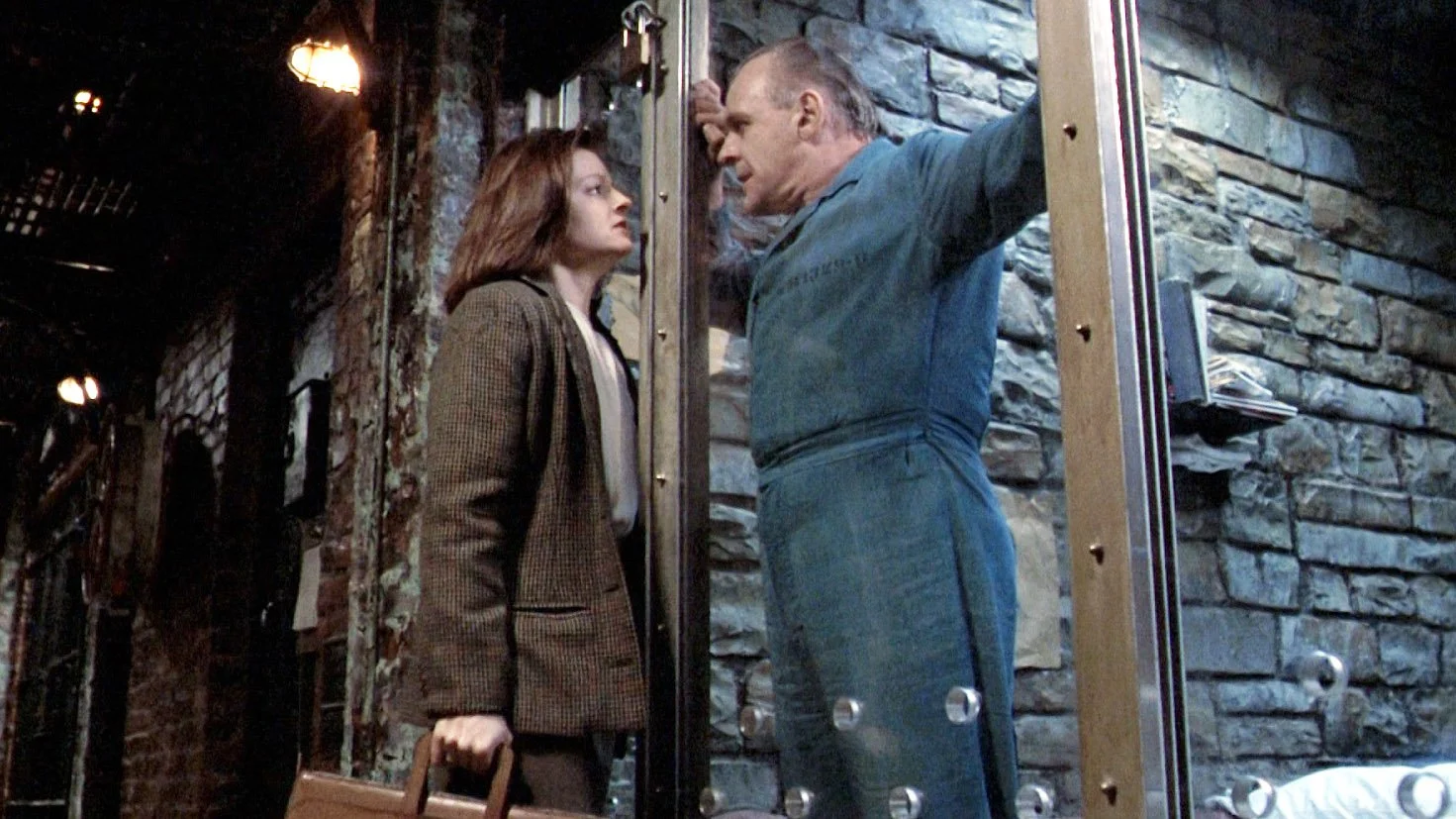
Jodie Foster and Anthony Hopkins in The Silence of the Lambs (1991)
As it reaches 35 years old, it is crucial to recognize that Jonathan Demme’s film was not just a box-office hit; it was a major cultural milestone. Before it, horror was Hollywood’s "poor cousin," confined to cheap scares and masked villains. The Silence of the Lambs elevated the genre to high culture, becoming only the third (and last) film in history to sweep the Oscar's "Big Five": Best Picture, Director, Actor, Actress, and Screenplay.
Without Hannibal Lecter’s terrifying elegance, we wouldn’t have the psychological depth of modern villains. Without Clarice Starling’s raw bravery, we wouldn’t see the rise of heroines who don’t need rescue. The film proved that fear doesn’t have to come from the supernatural but can stem from the human mind. It showed Hollywood that a well-written conversation in a closed room can be more intense than any explosion. And here’s the comfort: watching a story where dialogue matters more than special effects is a relief for eyes fatigued by digital screens.
But why does it stay so relevant—and captivating—in 2026?
The answer lies in the gaze. Demme’s direction is known for its direct close-ups, where characters look straight into the camera. When Hannibal (Anthony Hopkins) analyzes Clarice (Jodie Foster), he’s really analyzing us.
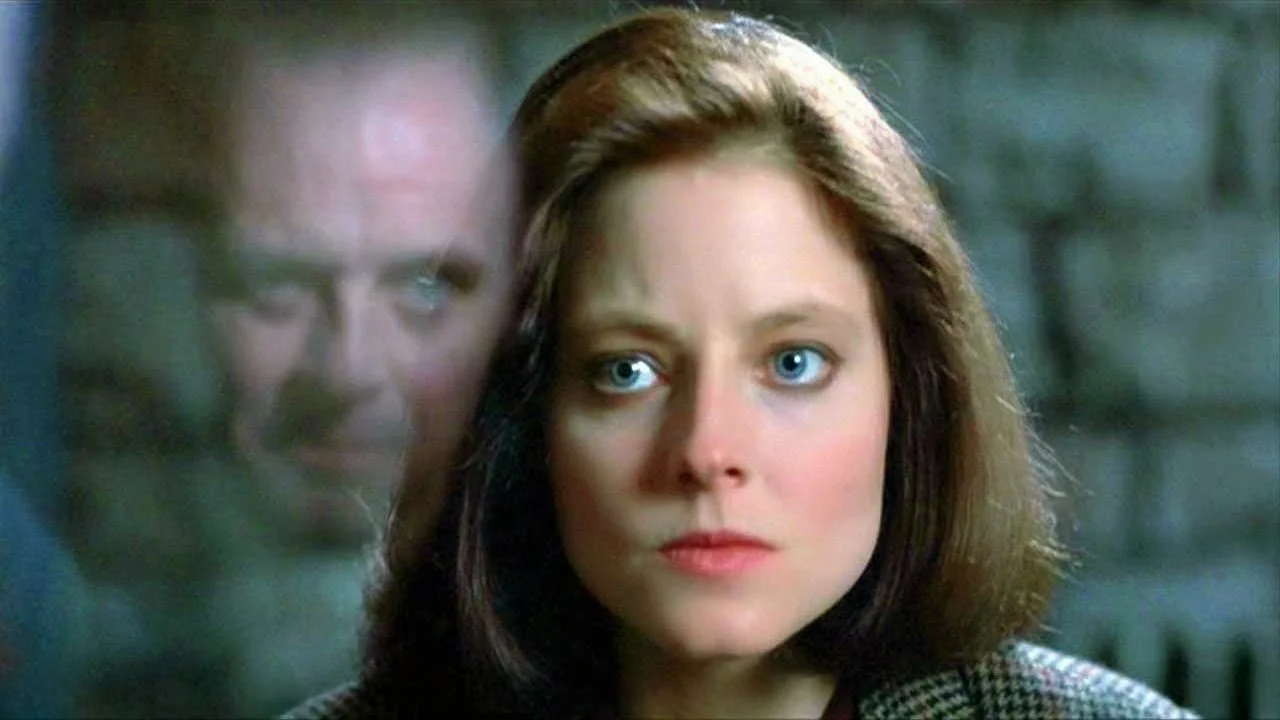
In 1991, this caused discomfort. In 2026, it causes panic. We live in an age of extreme self-curation, where transparency is just another filter. We create digital avatars and edit our opinions not to reveal who we are, but to shield who we fear we might be. Today, our biggest fear isn’t a cannibal in a cell but the vulnerability of being seen without a screen mediating. Hannibal Lecter is the brutal antidote to this vanity. He’s the monster who ignores the fake bio line and looks directly into the architecture of desire and trauma. He doesn’t care about what you post; he cares about what you hide.
Revisiting The Silence of the Lambs in 2026 is, therefore, an exercise in mental bravery. The film reminds us that true monstrosity can reside within the politeness of institutions, and that the only real freedom requires us to lower our defenses. Clarice Starling succeeded because she embraced her own vulnerability before the abyss. Maybe we need to do the same. After all, the greatest fear is not being attacked in the dark, but finding someone who can see us honestly and mercilessly under the harsh light of truth. And realizing that, contrary to what our fear tells us, being seen without the masks we carefully curate does not destroy us; it restores the humanity we so desperately seek.
May cinema continue to be that safe place for us to face our monsters. Enjoy the movie.
Written by Raphael Rosalen
This piece was originally published as a monthly column on Media and Visual Culture for the Brazilian digital newspaper O DEMOCRATA. You can access the original text in Portuguese [here].